top of page
Sissel Endresen
Art and design
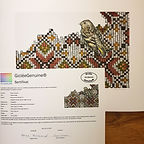
Giclée Fine Art Print, or simply Giclée (zhee-clay), is the name of a modern reproduction and printing method that is increasingly being used by countless artists, photographers, galleries, and museums worldwide.
Giclées have become common in the collections of most major museums, including the Museum of Modern Art in New York (MoMA) and the Metropolitan Museum of Art. In recent years, Giclées have fetched auction prices. In 2017, Sotheby’s in London sold a Giclée print by Gerhard Richter for over 10 million.
Giclée is the most advanced digital art printing process available and includes both digitization of original works, digital retouching, and the printing itself. Digitization and retouching are only relevant for reproductions, as photographs and digital graphics are already digitally prepared for printing. At every stage, high and strict quality standards are applied. Digitization, whether done by photography or sPrinting must be done at such a high resolution that all details appear completely clear and sharp on the print, and colors and brightness must also be exactly like the original. Printing is done with high-resolution large-format photo printers on various media, and both the ink and the media must have a lifespan of at least 66 years. Giclée can thus be both original art and reproductions. Photography and digital graphics are original art, while photographed and scanned drawings and paintings are reproductions. What makes the reproductions sought after is the quality, that they are signed, and that they are produced in a limited edition. Giclée began in the mid-1980s in the USA, where the first high-quality digital graphic prints were created on a Scitex IRIS printer using an Apple computer. In 1991, the artist Jack Duganne introduced the term 'giclée,' which has since become the common term for this technique. The word giclée means sprayed or squirted.

bottom of page